Cardiac Sciences
The Heart-Kidney Connection: Why Your Kidneys Matter for Your Heart (and Vice Versa)

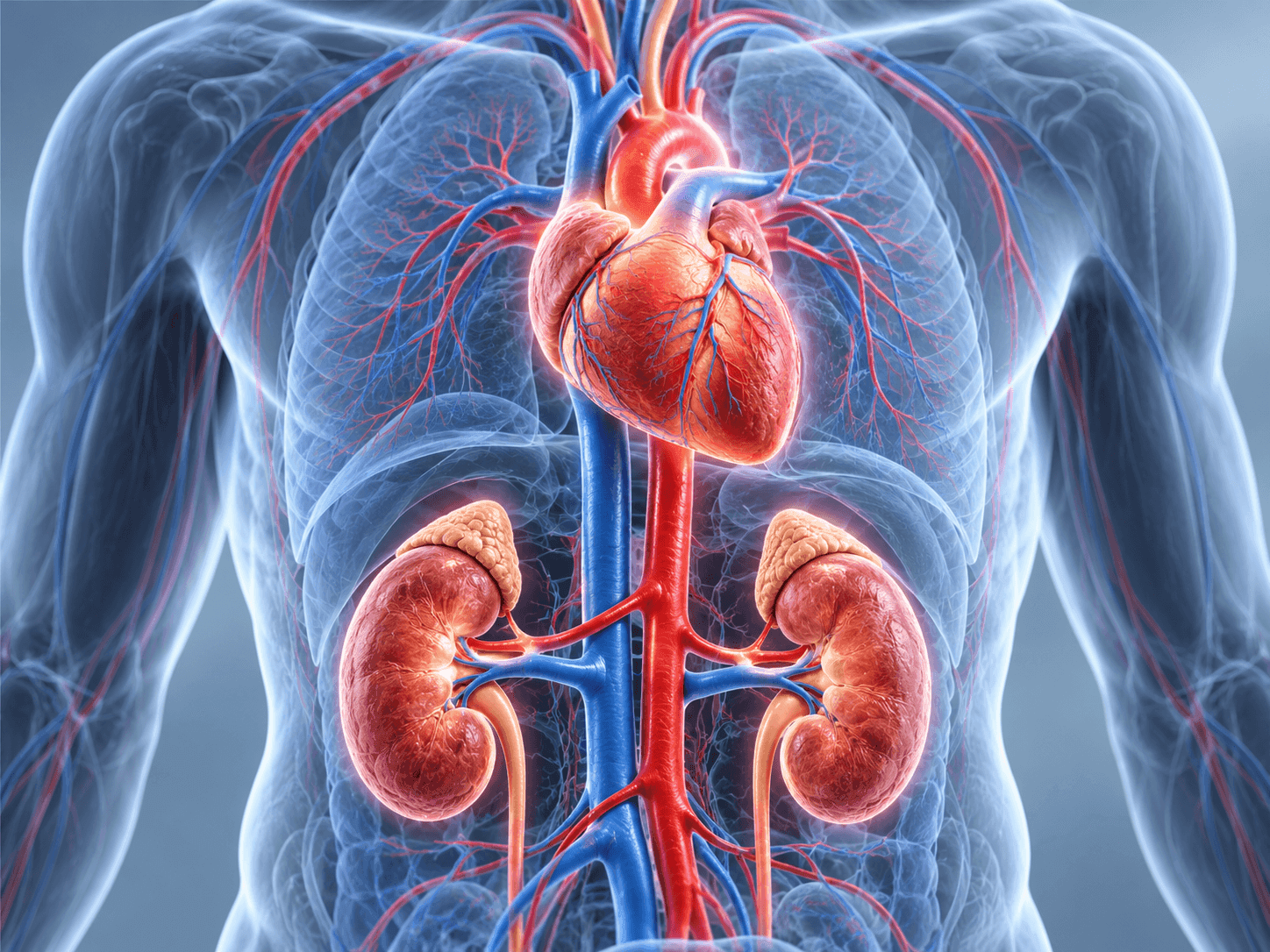
Every organ in the body depends on the others in one way or another. Together, they make us function as whole human beings. But every so often, two organs share something that goes beyond ordinary interconnection, something closer to a partnership. Look after one, and you are, indirectly, looking after the other too. It is one of those quiet wonders of how the human body is built, and it is exactly what happens between the heart and the kidneys.
This relationship is often called the cardio-renal link (cardio for heart, renal for kidney). Understanding it matters because heart disease and chronic kidney disease (CKD, long-term damage to the kidneys) can occur together, sometimes without obvious kidney symptoms in the early stages.
How Common Is the Heart-Kidney Overlap?
Heart failure (a heart that cannot pump blood as well as the body needs, not a heart that has stopped) and chronic kidney disease frequently occur together. Around 10 to 30 percent of people with chronic kidney disease have heart failure, while 30 to 60 percent of people with heart failure also have chronic kidney disease.
The overlap is partly explained by shared risk factors such as high blood pressure, type 2 diabetes, fatty build-up in the arteries, and inflammation. Heart failure can reduce blood flow to the kidneys, while kidneys that are not working well can hold on to salt and water, increasing the workload on the heart.
I hear this reasoning in clinic often: I have two kidneys, so even if I lose one, I still have the other. That's technically true, but simple arithmetic doesn't capture what happens inside the body. It is closer to combining two truckloads of cargo onto a single truck: the remaining kidney does not just do half the original job; it takes on nearly the full load the two were sharing before. That is exactly why the risk factors already stressing your heart, blood pressure, diabetes, inflammation, deserve the same seriousness when it comes to your kidneys too.
What Is Cardiorenal Syndrome (CRS)?
Cardiorenal syndrome is a condition in which heart problems can affect the kidneys, or kidney problems can affect the heart. This two way relationship can be driven by too much fluid in the body, reduced blood flow, inflammation and changes in the body's hormone systems.
Cardiorenal syndrome is commonly divided into five types. In the names below, acute means sudden, chronic means long-term, cardiorenal means the heart problem comes first, and renocardiac means the kidney problem comes first:
| CRS Type | Classification | What It Means |
|---|---|---|
| Type 1 | Acute Cardiorenal | A sudden heart problem leads to sudden kidney damage. |
| Type 2 | Chronic Cardiorenal | Long-term heart failure contributes to chronic kidney disease that gets worse over time. |
| Type 3 | Acute Renocardiac | A sudden kidney injury leads to sudden heart problems. |
| Type 4 | Chronic Renocardiac | Chronic kidney disease contributes to long-term problems with how the heart works. |
| Type 5 | Secondary CRS | A condition affecting the whole body such as sepsis (the body's extreme reaction to an infection), diabetes or lupus (an autoimmune condition, where the body's defence system attacks its own tissues) affects the heart and kidneys at the same time. |
Why the Heart-Kidney Link Matters for Your Health
• People with both heart failure and chronic kidney disease have more hospital admissions and a faster decline in kidney function than people with either condition alone.
• Worsening kidney function is linked to a higher risk of death from heart or blood vessel disease, hospital admission for heart failure, and death from any cause.
• Changes in kidney function can affect how heart disease is treated, so both organs may need to be assessed together.
What the 2026 ESC “STAMP on CKD” Framework Means
The 2026 European Society of Cardiology (ESC) guidelines (the recommendations doctors follow), developed with the European Renal Association, focus specifically on the combined treatment of heart and blood vessel disease and chronic kidney disease.
The STAMP on CKD framework, where each letter stands for one step, summarizes the approach:
| Step | Action | Patient-Friendly Meaning |
|---|---|---|
| S | Screen | Check kidney health in patients with heart or blood vessel disease. |
| T | Triage | Assess the person's combined heart and kidney risk. |
| A | Address | Address chronic kidney disease risk with appropriate treatment. |
| M | Modify | Adjust treatment for heart and blood vessel disease according to how well the kidneys are working. |
| P | Plan | Coordinate care between heart specialists, kidney specialists, and other services when needed. |
Which Kidney Tests Are Used?
The guidelines recommend checking kidney health in people with heart or blood vessel disease using two key tests.
• eGFR (estimated Glomerular Filtration Rate): a blood test that estimates how well the kidneys are filtering your blood.
• UACR (Urine Albumin-to-Creatinine Ratio): a urine test that checks for albumin, a protein that can leak into urine when the kidneys are damaged.
Chronic kidney disease is confirmed when the abnormalities last, generally for at least three months.
Modern Treatments That Can Protect Both the Heart and Kidneys
Treatment depends on the person's diagnosis, kidney function, heart or blood vessel condition, blood pressure, diabetes status, and other medical factors. Several groups of medicines are now used because they can benefit both organs.
SGLT2 Inhibitors
A large combined analysis of 58,816 participants across eight randomized trials (studies where people are assigned by chance to the medicine or a comparison group) found that SGLT2 inhibitors (a group of medicines) reduced hospital admissions for heart failure, lowered the risk of sudden kidney damage, and slowed worsening of kidney disease in people both with and without diabetes.
• Hospital admissions for heart failure decreased by about 25 to 32 percent.
• The risk of sudden kidney damage was reduced by approximately 23 to 28 percent.
• Kidney disease worsening was reduced by 35 percent in people with diabetes and 26 percent in people without diabetes.
In clinic, what stands out to me is the "without diabetes" group. Most people still associate this group of medicines purely with blood sugar control, yet it protects hearts and kidneys even when diabetes is not in the picture.
Other Foundational Therapies
• RAS inhibitors, a group of medicines that includes ACE inhibitors and ARBs, may be used to lower blood pressure and reduce pressure within the kidneys in suitable people.
• Treatment with statins to lower cholesterol reduces the risk of heart and blood vessel disease.
• Finerenone and GLP-1 receptor agonists (two more kinds of medicine) may be recommended for selected people with type 2 diabetes and albumin (a protein) in the urine.
Blood Pressure and Anticoagulation Considerations
For suitable people whose eGFR (the kidney filtering score from the blood test above) is at least 30 mL per min per 1.73 square meters, the 2026 ESC guidance recommends a target for systolic blood pressure (the top number in a blood pressure reading) of 120 to 129 mmHg when the person tolerates it well.
In atrial fibrillation (an irregular heartbeat), direct oral anticoagulants (a type of blood-thinning medicine) may be preferred over warfarin (another blood-thinning medicine) in some patients with reduced kidney function, depending on the exact eGFR, medication choice, and individual medical factors.
Frequently Asked Questions

Latest Blogs
View All BlogsLatest Blogs