

Spine Services
Conservative Treatment vs. Spine Surgery: When to Make the Call
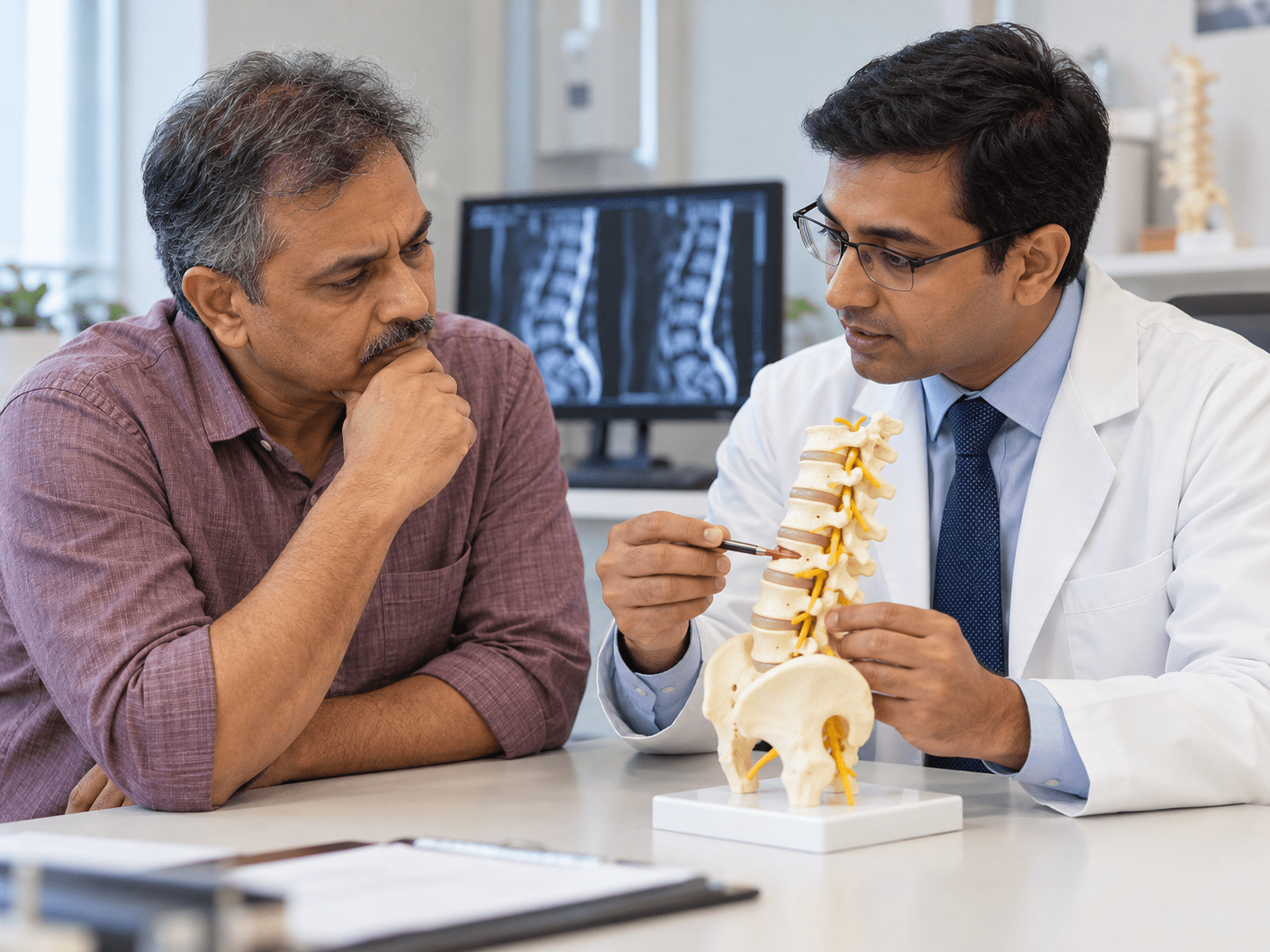
Back or neck pain does not automatically mean you need surgery. For most people, the first step is conservative (non-surgical) treatment. Surgery becomes more relevant when a spinal nerve is under severe pressure, weakness or numbness is getting worse, the spine is unstable, or when appropriate non-surgical care has not provided enough relief. An initial spine assessment determines which of these applies in a given case.
Radiculopathy, often felt as sciatica (pain that travels down the leg), happens when a spinal nerve is irritated or under pressure, causing pain, numbness or weakness. It can be serious, but many cases improve without surgery. That improve-without-surgery pattern is why radiculopathy sits at the centre of the decision between non-surgical care and surgery.
When Can Spine Problems Be Treated Without Surgery?
Treatment depends on your diagnosis, examination of your nerves and muscles, imaging (scans such as MRI), symptom duration, and how much they affect daily life. Doctors don't weigh any one factor alone; together, they build the overall picture that determines which option below to try first.
For many non-emergency spine conditions, doctors may first recommend:
• Physiotherapy and supervised rehabilitation
• Changes to activities, posture and how you set up your workspace
• Pain-relieving or anti-inflammatory medicines when medically appropriate
• Weight management and gradual return to activity
• Selected injections around the affected spinal nerve in suitable patients
The duration of conservative care varies. Some people improve in a few weeks; others need a few months. If there are urgent nerve-related symptoms, such as worsening weakness or bowel/bladder changes, you may need a surgical assessment sooner. That is why conservative care is usually reviewed at set intervals rather than left open-ended, so you can address a plan that isn't working early.
5 Spine Warning Signs That May Mean Surgery Is Needed
1. Persistent Pain That Radiates into the Arms or Legs
Radiating pain (pain that travels away from the spine into an arm or leg) can be caused by pressure on a nerve from a herniated disc (a disc whose soft center pushes out through its outer layer) or narrowing of the spaces in the spine. If this pain is persistent, worsening, or limits your movement, sleep or daily activities, it should be assessed by a spine specialist. It's this pattern of persistence, rather than pain intensity alone, that should prompt the assessment.
2. Progressive Numbness, Tingling or Muscle Weakness
Increasing weakness, foot drop (difficulty lifting the front of your foot), reduced grip strength, or worsening numbness can indicate pressure on spinal nerves. These symptoms need timely evaluation because prolonged pressure can affect recovery. This risk to recovery, more than the weakness itself, often shortens the time spent on non-surgical care for these signs.
3. Loss of Bowel or Bladder Control
Sudden changes in bowel or bladder control with severe back pain, numbness around the inner thighs, buttocks, or genital area, or leg weakness can indicate cauda equina syndrome (a severe compression of the nerves at the bottom of the spine). This is a medical emergency and you need to be seen at a hospital immediately. Do not wait to book a routine appointment if you have these symptoms. Of all the signs on this list, this is the one where the usual weeks-to-months of non-surgical care simply does not apply.
4. Difficulty Walking, Standing or Maintaining Balance
Being able to walk less before symptoms make you stop, balance problems or difficulty standing may occur with pressure on the spinal cord or nerves and should be assessed by a doctor. As with the other signs above, what matters is a pattern that keeps getting worse, not an isolated bad day.
5. Spinal Instability, Deformity or Severe Trauma
A change in the shape of the spine that keeps getting worse, unstable fractures and major structural damage may require surgery. Imaging and specialist assessment are needed to decide the right treatment. Unlike the nerve-related signs above, instability is primarily a structural finding (a problem with how the spine is built or lined up), so assessment typically starts with the same MRI-based set of tests mentioned earlier.
How Doctors Decide Between Conservative Treatment and Spine Surgery
Doctors consider several factors before recommending surgery:
• The exact diagnosis and cause of symptoms
• Whether there is weakness that is getting worse, numbness or loss of nerve function
• Whether MRI or other scan results match your symptoms
• How long symptoms have lasted and whether they are worsening
• How much symptoms affect walking, sleep, work and daily activities
• Response to appropriate non-surgical treatment
• Your overall health, goals, and expected recovery
This is why two people with similar pain levels may get different advice; the decision is based on the whole picture, not just pain intensity.
Common Types of Spine Surgery
When surgery is needed, options may include:
• Microdiscectomy / Discectomy – removal of the part of a disc pressing on a spinal nerve.
• Laminectomy / Decompression – removal of bone or tissue to create more space around compressed nerves or the spinal cord.
• Spinal Fusion – joining selected spinal bones to improve stability in suitable cases.
• Minimally Invasive Spine Surgery – selected procedures performed through smaller cuts where suitable for the condition, sometimes supported by image-guided and robotic-assisted systems for added precision in complex cases.
Success rates vary by procedure and which patients are suitable. Your surgeon will explain expected outcomes for your specific condition. Recovery support afterward, through physiotherapy and structured rehabilitation, also shapes the outcome, not the procedure alone.
Benefits and Risks of Spine Surgery
Possible benefits include:
• Reduced nerve-related pain
• Improved mobility and function
• Stabilization of the spine where required
• Prevention of further loss of nerve function in selected conditions
Possible risks include:
• Infection, bleeding, blood clots
• Nerve injury
• Persistent symptoms
• Anesthesia-related complications
• Possibility of further treatment depending on the condition and procedure
No surgery can guarantee a “pain-free life”, but for the right patients, it can significantly improve function and quality of life.
Conclusion
The need for spine surgery cannot be decided from pain intensity alone. It depends on your diagnosis, nerve-related symptoms, imaging, response to treatment and impact on daily life.
If you have weakness that is getting worse, numbness, walking difficulty or persistent pain that travels into an arm or leg, you should seek specialist evaluation.
Frequently Asked Questions

Latest Blogs
View All BlogsLatest Blogs
Spine Services
Why Choose ISIC for Complex Spine & Spinal Cord Injuries Treatment

Cardiac Sciences
The Heart-Kidney Connection: Why Your Kidneys Matter for Your Heart (and Vice Versa)
Cardiac Sciences
Is Your Heart the Same Age as You?
Spine Services
Physiotherapy for Spinal Injury Rehabilitation: Role and Benefits
Spine Services
Why Choose ISIC for Complex Spine & Spinal Cord Injuries Treatment
Cardiac Sciences
The Heart-Kidney Connection: Why Your Kidneys Matter for Your Heart (and Vice Versa)
Cardiac Sciences
Is Your Heart the Same Age as You?
Spine Services
Physiotherapy for Spinal Injury Rehabilitation: Role and Benefits


