

General
World Sight Day: Common Eye Conditions & the Importance of Regular Eye Check-ups
Most of us take our eyesight for granted until something feels slightly off. You might find yourself holding a restaurant menu at arm's length, squinting at road signs during evening drives, or rubbing your eyes after a long day in front of a laptop.
The menu hasn't necessarily changed. Your near vision might have. But guessing why, or borrowing someone's reading glasses, can't tell you whether the rest of your eyes are healthy.
World Sight Day, observed on 8 October in 2026, is a useful reminder to review your family's eye care. Many serious eye conditions develop silently, without early pain or sudden vision loss. A full examination checks more than whether you can read the bottom line.
The Global Picture: Why Preventable Vision Loss Matters
The World Health Organization estimates that at least 2.2 billion people have difficulty seeing near or distant objects. In at least 1 billion cases, the problem could have been prevented or hasn't yet been addressed.
That total includes vision impairment from several causes, including uncorrected refractive errors and cataracts.
Common causes include focusing problems, cataracts, diabetes-related eye damage, glaucoma & age-related damage to central vision. Some can be corrected; others need ongoing treatment to limit further damage. An examination shows which applies to you.
Understanding Common Eye Conditions
Refractive Errors: Myopia, Hyperopia, Astigmatism & Presbyopia
Focusing problems (refractive errors) occur when light doesn't focus properly on the light-sensitive layer at the back of the eye (retina).
- Short-sightedness (myopia) makes distant objects look blurred.
- Long-sightedness (hyperopia) can make nearby work difficult & cause strain.
- An uneven curve of the eye's clear front surface or lens (astigmatism) can blur or distort vision at different distances.
- Age-related difficulty focusing close up (presbyopia) commonly becomes noticeable around 40.
Glasses or contact lenses can help, depending on the problem. Very strong short-sightedness also increases the risk of problems such as retinal detachment, so a prescription check alone may not be enough.
Cataracts: Clouding of the Natural Lens
A cataract is a gradual clouding of the clear lens inside the eye. Vision may become dimmer, colours less clear & headlights more dazzling.
Surgery replaces the cloudy lens with an artificial one when appropriate. The decision depends on how vision affects daily life, examination findings & your preferences, with benefits & risks discussed individually.
Glaucoma: Damage That Can Develop Quietly
Glaucoma damages the nerve carrying visual information to the brain (optic nerve). The common open-angle form may reduce side vision before you notice a problem.
High eye pressure is a risk factor, but glaucoma can occur at normal pressure too, so pressure testing alone can't rule it out. The specialist may also examine the nerve & test your field of vision. Treatment can slow further damage but doesn't bring back sight already lost.
Diabetic Retinopathy & Macular Degeneration
Diabetes can damage small blood vessels in the retina (diabetic retinopathy), sometimes before vision changes. Managing blood sugar & attending recommended eye examinations both matter.
Age-related macular degeneration (AMD) affects the central vision used for reading & recognising faces. Dry & wet forms need different management. Certain vitamin combinations help some people with intermediate AMD, but they aren't general eye supplements. Wet AMD may need injections into the eye to control abnormal leaking blood vessels.
Everyday Surface Conditions: Dry Eye & Conjunctivitis
Dry eye & inflammation of the eye's surface lining (conjunctivitis) can cause burning, redness & discomfort. Symptoms that don't clear up need assessment. A painful red eye with reduced vision shouldn't be treated as ordinary irritation at home.
Recommended Eye Exam Schedule by Age & Risk Factors
This American Academy of Ophthalmology guidance is a starting point for adults without symptoms or known risk factors. Your specialist may suggest a different schedule, & new symptoms should never wait for the next scheduled visit.
| Age | General examination interval |
|---|---|
| Under 40 | Every 5 to 10 years if healthy & without risk factors |
| Around 40 | A baseline comprehensive eye examination is recommended |
| 40 to 54 | Every 2 to 4 years |
| 55 to 64 | Every 1 to 3 years |
| 65 & older | Every 1 to 2 years |
Childhood & Adolescent Schedule
Children need screening from birth, including checks in infancy & the preschool years. Screening checks whether a full specialist examination is needed; the two aren't interchangeable.
Between three & five years, vision & eye alignment should be checked. Continue screening through school years as your doctor advises. A failed or unclear result, an eye turning in or out, trouble seeing the board or other concerns call for a full examination.
Don't wait for a child to describe blurred vision neatly. They may assume everyone sees as they do. Tell their doctor about squinting, sitting unusually close to objects or changes in schoolwork.
More Frequent Checks for Higher Risk
Adults with type 1 diabetes generally need a first dilated examination five years after onset; people with type 2 need one at diagnosis. Follow-up is usually yearly, but some people with normal examinations & well-controlled blood sugar may be reviewed every one to two years. Existing eye damage can need closer follow-up.
Contact lens wearers should have yearly reviews. Family history, existing eye disease & other health conditions can change the schedule. Long screen hours alone don't justify yearly exams.
Your eye care consultation is the place to agree on the interval, rather than following someone else's prescription or calendar.
What Happens During a Comprehensive Medical Eye Exam?
Your doctor asks about symptoms, medicines, existing health conditions & family eye history. Describe the actual difficulty: reading messages, judging steps or seeing headlights clearly.
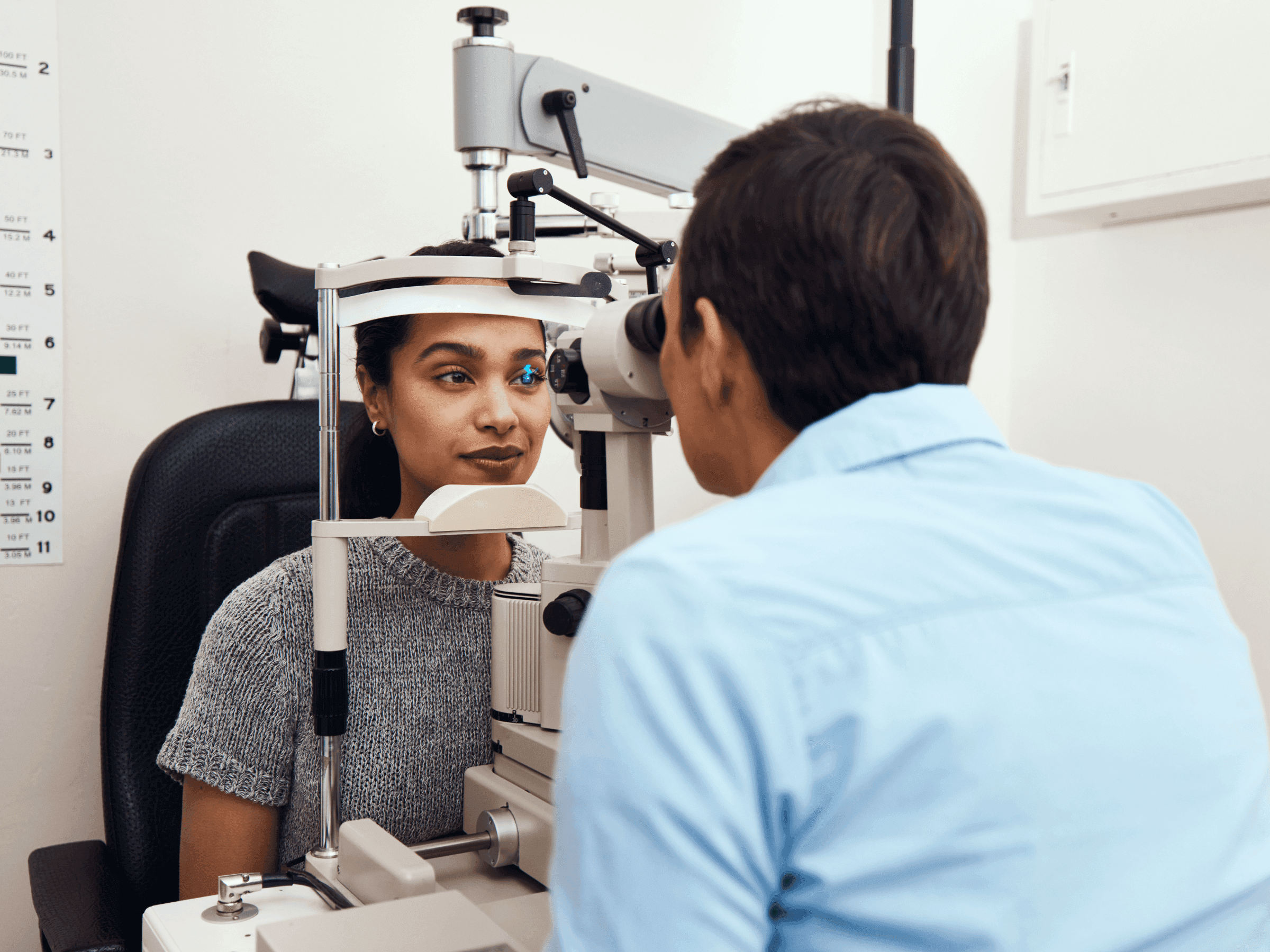
Testing may include reading an eye chart, checking the glasses prescription, eye movements & pressure, & examining the front of the eye with a lighted microscope. Drops may widen the pupils so the specialist can inspect the retina & optic nerve. Further scans or field-of-vision tests depend on the findings.
Tell the doctor if internal medicine is managing your diabetes or blood pressure. Bring current medicines & previous eye reports. Ask whether the drops could temporarily affect reading or driving, so you can plan your journey.
Red Flag Symptoms: When You Should Not Wait
Seek immediate eye or emergency assessment for sudden vision loss, a new shower of floating spots, flashes of light, or a curtain-like shadow across your sight.
Severe eye pain with blurred vision, redness, nausea or coloured rings around lights also needs urgent care. Don't assume a new symptom is simply a change in glasses power. Serious eye injury needs immediate assessment too.
Everyday Habits to Protect Your Sight
Take regular breaks from close-up work & blink normally. These habits help comfort; they don't replace an examination or treat glaucoma.
Wash & dry your hands before handling contact lenses. Keep lenses away from water & don't sleep in them unless your eye specialist advises it. Even approved overnight wear carries infection risk.
Wear appropriate sun protection, manage diabetes & blood pressure, & follow prescribed treatment. Avoid sharing eye drops. Persistent redness or pain deserves a diagnosis, not a trial of whatever is left in the bathroom cabinet.
Before You Leave the Consultation
Bring your usual glasses. Ask what was found, whether your prescription has changed & when to return. If treatment is prescribed, check which eye needs it, how to use it & what to do if irritation develops.
For a child, ask whether the school needs information about glasses or classroom seating. For an older relative, check they can read the instructions & manage any drops, & involve a family member if they'd like help.
A written follow-up date is easier to remember than being told to return sometime. Keep it with the report.
Make World Sight Day Your Reminder
Before booking everyone in on the same schedule, check what each person needs. A child with a failed screening, a parent with diabetes & an older relative struggling with headlights have different questions.
Bring those questions along. The aim is to understand your eyes & leave knowing what happens next.
Disclaimer: This article provides general health information & does not replace professional medical advice, diagnosis or treatment. Always consult a qualified doctor for medical advice, diagnosis & treatment. Do not ignore symptoms, delay seeking care or change prescribed treatment without consulting your doctor.
Frequently Asked Questions

Latest Blogs
View All BlogsLatest Blogs

General
World Mental Health Day: Breaking the Stigma Around Seeking Psychiatric & Neurological Care

Orthopaedics
World Arthritis Day: Early Signs, Diagnosis & Modern Treatment Options for Joint Pain

Internal Medicine
Seasonal Flu & Viral Infections: How to Protect Your Family This Festive Season

Renal Sciences
Understanding Chronic Kidney Disease: Stages, Symptoms & When Dialysis Becomes Necessary
General
World Mental Health Day: Breaking the Stigma Around Seeking Psychiatric & Neurological Care
Orthopaedics
World Arthritis Day: Early Signs, Diagnosis & Modern Treatment Options for Joint Pain
Internal Medicine
Seasonal Flu & Viral Infections: How to Protect Your Family This Festive Season
Renal Sciences
Understanding Chronic Kidney Disease: Stages, Symptoms & When Dialysis Becomes Necessary


